

Radon Testing in Hunterdon County, NJ
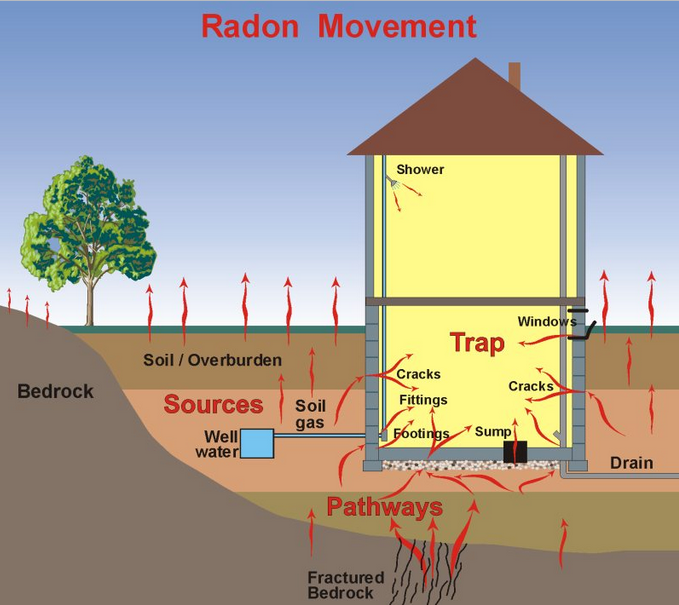
Radon is a naturally occurring radioactive gas that can accumulate inside homes without any visible or noticeable signs. The only way to determine whether elevated radon levels are present is through proper testing.
SAW Home Inspections provides professional radon testing throughout Hunterdon County and surrounding areas in accordance with EPA protocols and New Jersey Department of Environmental Protection (NJDEP) guidelines.
Licensed Radon Measurement Technician
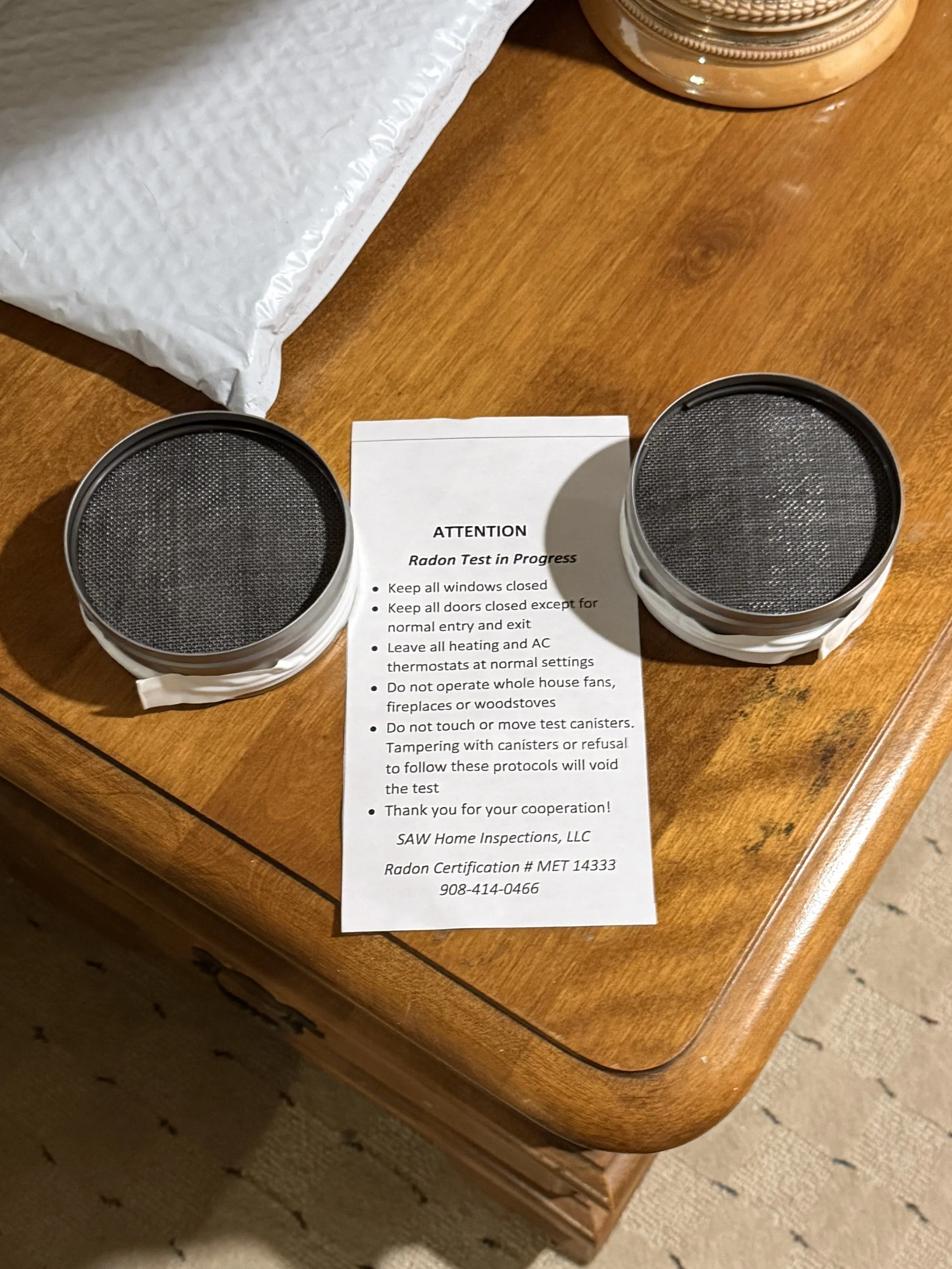
Stephen Willis is a New Jersey DEP Licensed Radon Measurement Technician and performs testing in compliance with NJDEP requirements. Testing is conducted using charcoal canisters placed according to EPA and state standards.
Proper placement and protocol matter. Radon testing must be performed under controlled conditions and in the lowest livable level of the home to ensure accurate results.
Why Radon Is a Health Concern
Radon is produced naturally from the breakdown of uranium in soil and rock. When radon enters a home and becomes trapped indoors, long-term exposure can increase the risk of lung cancer.
According to the U.S. Environmental Protection Agency (EPA), radon is the second leading cause of lung cancer in the United States and the leading cause among non-smokers.
Because radon is colorless, odorless, and invisible, testing is the only reliable way to determine whether elevated levels are present in a home.
How Radon Testing Is Performed
• Placement of charcoal canisters in the lowest livable level of the home
• Following closed-house conditions in accordance with EPA guidelines
• Test duration ranging from 48 to 144 hours, depending on scheduling and transaction requirements
• Laboratory analysis through a certified facility
• Clear reporting of results
Radon testing can be performed in conjunction with a home inspection or scheduled as a standalone service.
Radon in Hunterdon County
Elevated radon levels are not uncommon in parts of Hunterdon County and other areas of central and northern New Jersey. Homes with basements may be particularly susceptible due to soil conditions and foundation construction.
Because radon levels can vary significantly from one property to another, testing is recommended during real estate transactions and whenever previous results are unavailable. Testing is also advisable after renovations involving the foundation, basement finishing, or structural modifications that may affect how soil gases enter the home.
Homes with existing radon mitigation systems should be tested periodically to confirm the system is operating effectively.
Radon Testing Frequently Asked Questions
How long does a radon test take?
Radon testing typically runs between 48 and 144 hours, depending on scheduling and real estate transaction requirements. The most common testing period during a home purchase is 48 hours, in accordance with EPA and NJDEP guidelines.
Where is the radon test placed?
Radon canisters are placed in the lowest livable level of the home, following EPA protocols. Proper placement is essential to ensure accurate results.
Do I need a home inspection to schedule radon testing?
No. Radon testing can be performed as a standalone service or in conjunction with a home inspection.
What radon level is considered high?
The EPA recommends mitigation when radon levels measure at or above 4.0 picocuries per liter (pCi/L). If elevated levels are detected, mitigation systems are highly effective at reducing radon concentrations.
Should a home with an existing radon mitigation system still be tested?
Yes. Even homes with mitigation systems should be tested periodically to confirm the system is functioning properly.
What happens if my radon levels are elevated?
If radon levels measure at or above the EPA action level of 4.0 pCi/L, a radon mitigation system can be installed to reduce radon concentrations inside the home. Mitigation systems are highly effective and, in most cases, can significantly lower radon levels.
The cost of mitigation varies depending on the home’s construction and layout, but most homes can be successfully mitigated at a reasonable cost. If elevated levels are detected, recommendations can be provided for qualified mitigation professionals.