

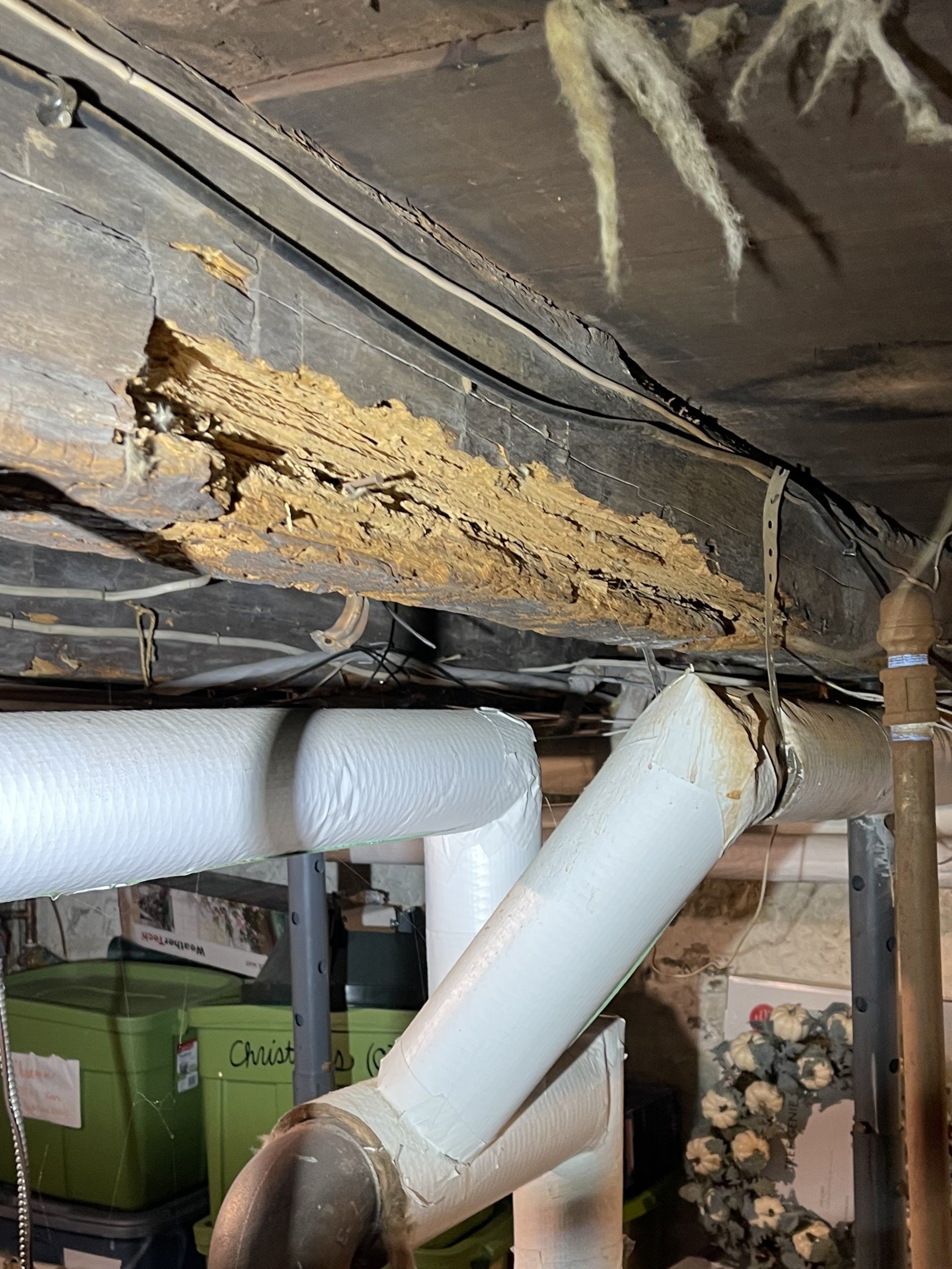
Wood Destroying Insect (WDI) Inspections
In the United States alone termites account for more than a billion dollars worth of damage to homes every year. Termites and other wood-destroying insects can do considerable damage to a home before they are ever discovered. A home inspection, in addition to a termite inspection will also let you know of conditions around your home that might be conducive to wood destroying insects in order to prevent a future infestation. No home inspection is complete without the addition of a WDI inspection.
SAW Home Inspections provides WDI inspections throughout Hunterdon, Warren, Somerset, and Morris Counties in New Jersey.
Potential Damage from Wood Destroying Insects
Wood-destroying insects can cause structural damage over time by feeding on or tunneling through wood components. Termites, for example, consume cellulose materials and may weaken structural framing if left untreated. Carpenter ants and certain beetles excavate wood to create galleries, which may also affect structural integrity.
The extent of damage varies depending on the duration and severity of activity. Early detection during a real estate transaction allows for appropriate evaluation and treatment before more significant structural issues develop.
What Is Included in a WDI Inspection
A wood destroying insect inspection consists of a careful visual evaluation of accessible areas of the structure for evidence of:
• Active wood-destroying insect activity
• Past wood-destroying insect damage
• Conditions conducive to wood-destroying insects
The inspection includes accessible interior areas, basements, crawlspaces, and visible exterior components where wood-destroying insect activity may be present.
WDI inspections are limited to visible and accessible areas and do not involve destructive testing or dismantling of structural components.
WDI Inspections for Real Estate Transactions
Wood destroying insect inspections are frequently required during real estate transactions. Certain mortgage programs and lenders require a WDI report before closing.
The purpose of the inspection is to determine whether there is evidence of active infestation, past damage, or conditions that may promote wood-destroying insect activity.
If evidence is found, further evaluation or treatment by a licensed pest control professional may be recommended.
WDI Frequently Asked Questions
What insects are included in a WDI inspection
A WDI inspection evaluates visible evidence of wood-destroying insects such as termites, carpenter ants, carpenter bees, and wood-boring beetles
Is a WDI inspection the same as a termite inspection?
The term “termite inspection” is often used interchangeably with WDI inspection, but a WDI inspection may include evaluation for multiple types of wood-destroying insects, not just termites.
Are WDI inspections required for all home purchases?
Not all transactions require a WDI inspection. However, certain lenders and mortgage programs may require one prior to closing.
Does a WDI inspection include repairs?
No. A WDI inspection is a visual evaluation only. Treatment or repairs, if needed, must be performed by licensed contractors and pest control professionals.
Can a WDI inspection be performed as a standalone service?
Yes. WDI inspections can be performed as part of a home inspection or scheduled separately when required